Obituary: Hans van Manen
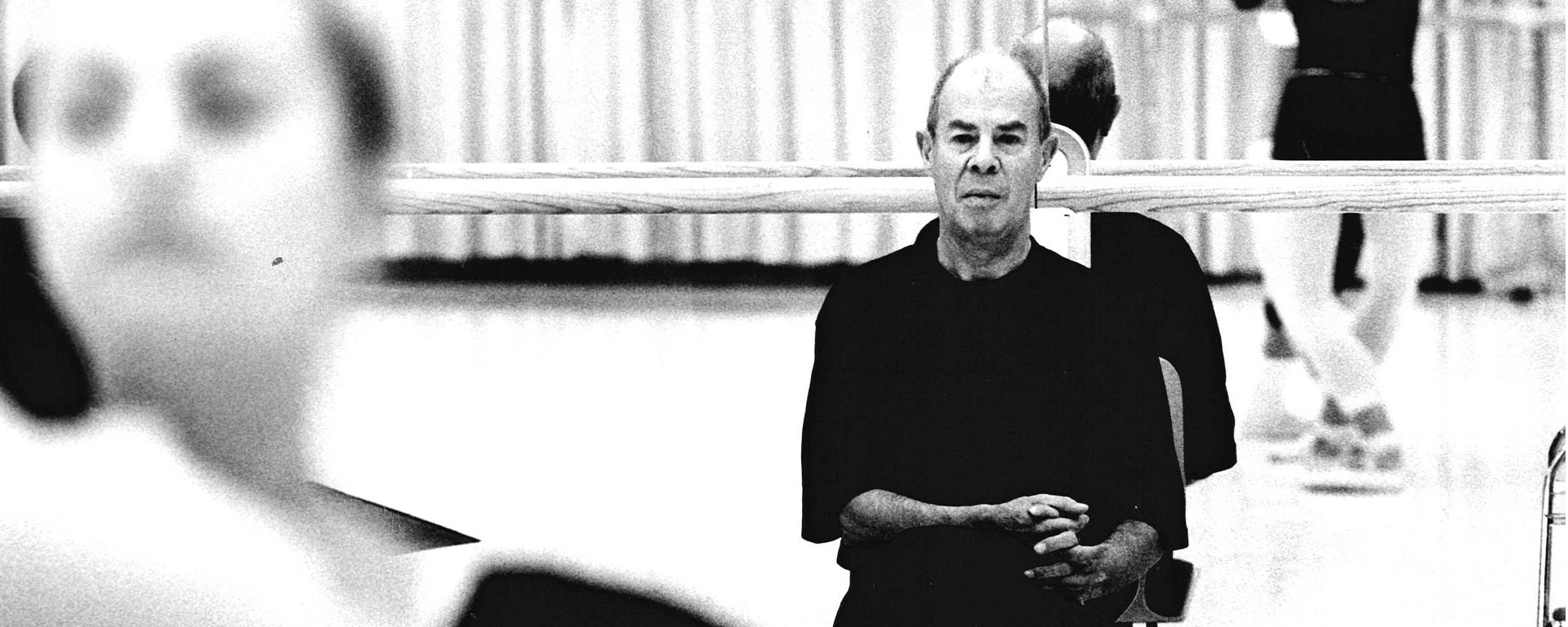
Hans van Manen passed away in Amsterdam on the evening of 17 December 2025. Born in 1932, the Dutchman was undoubtedly one of the most important choreographers of the 20th and early 21st centuries.
His work is primarily associated with the Nederlands Dans Theater (NDT) and the Dutch National Ballet, but he also occupies a prominent place in Munich's ballet history of the last fifty years. Just a few weeks ago, his piece Unisono (1978) was performed at the National Theatre during the Heinz Bosl Foundation's autumn matinee. His connection with Munich began in 1970, when the NDT performed Three Pieces from 1968 during a guest performance at the Ballet Festival Week. In 1973, the Bavarian State Opera Ballet rehearsed his choreography Grosse Fuge, followed two years later by a complete van Manen evening at the Cuvilliés Theatre, which combined the two pieces aimed at children and young people, Snippers and Ajakaboembie, with the humorous piece Septett Extra.
In 1898, the NDT returned to the Ballet Festival Week and brought Black Cake to Munich for the first time. In the Bavarian State Ballet's inaugural season in 1990/91, three works – Three Pieces, Vijf Tango's and Trois Gnossiennes – were added to the repertoire of the newly formed company, followed by Songs Without Words in the 1992/93 season. The 1994/95 season marked a first high point, when not only did Concertante receive its German premiere, but Hans van Manen also choreographed for the Munich ensemble for the first and only time: the duet Nacht, set to music by Irving Fine, created at the time by Christina McDermott and Oliver Wehe. By the end of the millennium, the Munich company's repertoire had expanded to include Déjà vu, Sarkasmen and Black Cake, followed in April 2001 by the German premiere of Kammerballett. At the 2002 Ballet Festival Week, the guest company NDT III performed its 2000 piece Two Faces. A second highlight came in February 2005 with the premiere of Portrait Hans van Manen, whose programme was complemented by Vijf Tango's, Black Cake and the solo first presented at the Terpsichore Gala IV, as well as Two and The Old Man and Me. Finally, in the 2007/2008 season, Adagio Hammerklavier celebrated its Munich premiere.
With Dances with Harp and Everyday, both created in 2014, Hans van Manen considered his choreographic oeuvre complete. It comprises over 150 works spanning a wide musical field – from Bach to Duke Ellington, from Haydn to Piazzolla, Stockhausen and Laurie Anderson. A passionate music lover, van Manen paid particular attention to classical modern music, thereby helping to bring works by rarely performed composers such as Grazyna Bacewicz, Boris Blacher and Jean-Yves Daniel-Lesur to the fore. His choreographies often broke with convention, such as the same-sex duets in Metaforen (1965) and Situation (1970) or the dance-film hybrid Mutations (1979), created in collaboration with Glen Tetley, which in some places calmly showed the dancers naked in the film or on stage. His affinity for cinematic art was also evident in other projects, such as the early work Kaïn & Abel (1961) with pre-produced film material, or the piece Live (1979) with real-time camera use.
In an interview with Sabine Janssen published in the Rheinische Post daily newspaper in July 2025, he summed up his creative credo as follows: ‘Yes, that's the only thing I find important in dance: what happens between people. I'm not interested in “they lived happily ever after”. Nobody is always fantastic and happy. I'm interested in what happens in between.’
A master of exploring this ‘in-between’ has left us. The Bavarian State Ballet mourns the loss of Hans van Manen and extends its sincere condolences to his partner Henk van Dijk and all those who were close to him.