Editorial: Portrait Judith Turos

Farewell to Judith Turos: 45 years with the Bayerisches Staatsballett
Slightly out of breath, ballet mistress Judith Turos appears at the stage entrance. She has just a few working days left before she officially bids farewell to the Bavarian State Ballet at the end of the season, after 45 years of service. She is currently rehearsing The Lady of the Camellias for the very last time, one of her favourite roles both as a dancer and as a coach. The dramatic roles such as Tatyana in Onegin, Juliet in Romeo and Juliet, Giselle in the romantic ballet of the same name, and indeed Marguerite in The Lady of the Camellias have always been close to the heart of the ‘dramatic’ dancer Turos.
For her, it was never just about technique. Both on stage and in the ballet studio, she always placed particular emphasis on storytelling, the interpretation of a character, and passing on her own experiences. If there is a lot to discuss, she is happy to stay in the studio a little longer with ‘her’ dancers. Since 2005, when she retired from active dancing, she has been passing on her knowledge to the younger generation.
The fact that Turo ended up at the Munich theatre company in the early 1980s is down not only to her indomitable will and the political climate of the time, but also to a bit of luck.
She began dancing at the age of seven. Initially at the local ballet school in a small Romanian town; two years later, she moved to the Ballet Academy in Cluj-Napoca, the country’s second-largest training school for classical dance. A bit of luck and a scholarship eventually led her to the Bolshoi Theatre’s Ballet Academy to complete her training – two of her teachers had managed to persuade the authorities to nominate the student of Hungarian descent for an artistic exchange programme that was actually intended only for Romanian citizens.
After successfully completing her training, she danced briefly with a Romanian touring company; until, at the age of 21, she fled during a guest performance in Germany and applied for political asylum in Munich.
With the help of some German friends, and with nothing but a ballet bag and a suitcase in hand, she finally found herself at the stage entrance of the National Theatre. And once again, she was in luck: a visiting ballet master happened to spot her and took her up to the ballet studio on the sixth floor, where she was allowed to audition. The director at the time, Edmund Gleede, allowed her to train with the company for a few months. The following season, she was offered a permanent contract.
In addition to Gleede, she also worked under Roland Hynd, who appointed her Principal Dancer. In the late 1980s, she began working with Konstanze Vernon, the director of the Bavarian State Ballet, which was founded shortly afterwards.
“I have the utmost respect for Konstanze, both as a person and as a woman. She was simply a great mentor when it came to life in the theatre. She taught us how to conduct ourselves in society, who to speak to, when and how – even at a political level – and how to dress. But she had two sides: one was very motherly, the other could sometimes be very harsh and hurtful. One day she’d tear you down, the next she’d take you in her arms again. You had to learn to deal with that.”
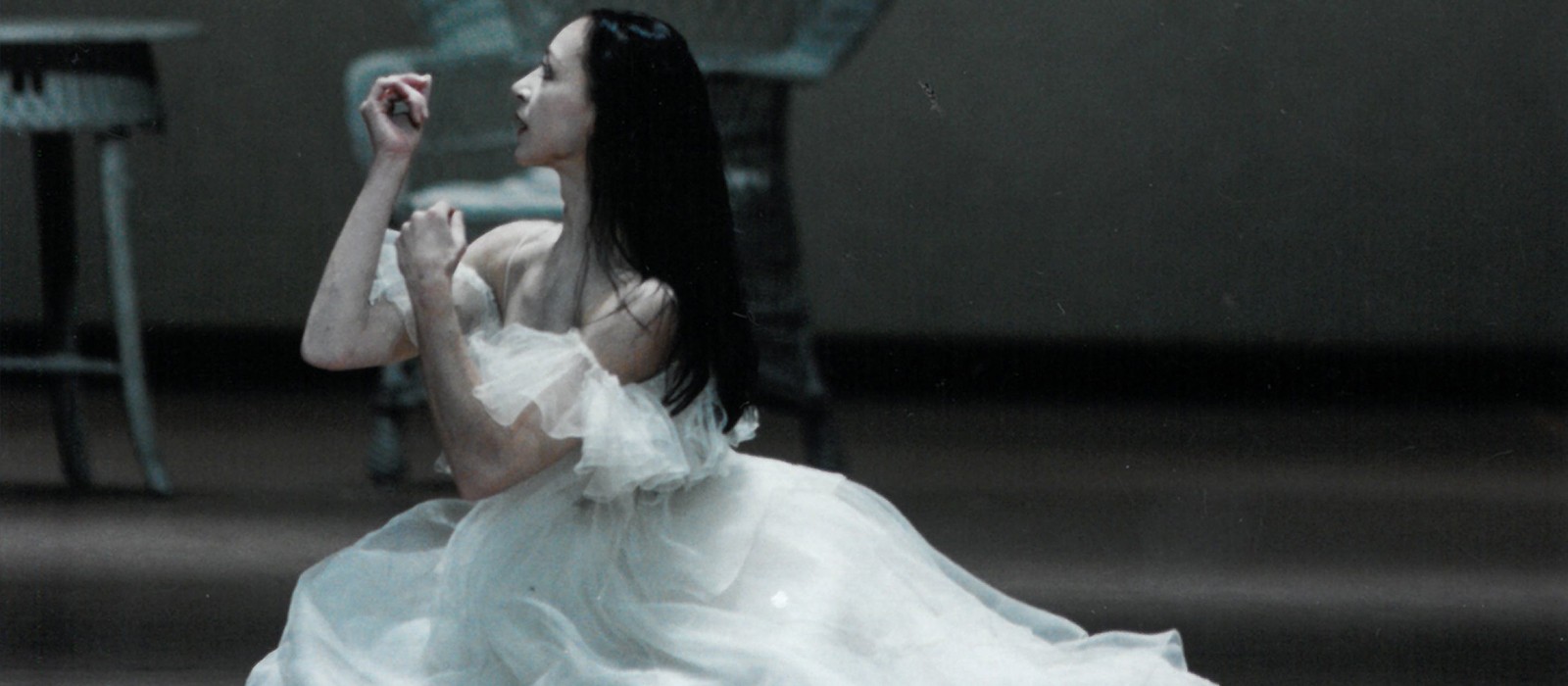
When she became a mother to a daughter at the age of 30, she was initially the subject of particular scrutiny. In the 1990s, combining motherhood with a professional ballet career was still rather unusual. Not least for this reason, she returned to the stage as Myrtha in Giselle just a few months after giving birth, at Vernon’s request. A role involving many jumps, which places very high demands on strength and fitness:
“During my first performance, I thought I was going to die. My shins were practically splitting. But I got through it,” she recalls with a laugh.
This physical and mental strength was what set her apart in particular. And that is precisely what she is grateful for. “I went through my career almost blindly, and I am very grateful that I always had the strength to stay on my path and see it all through.” Until 2003, when her knees gave out and she could soon only dance with the help of cortisone injections. In 2005, two chronically inflamed knee joints forced the prima ballerina to change direction. Her stage career and her work as a coach followed on seamlessly from one another. She had completed a course in dance pedagogy at the same time. You could hardly ask for more commitment.
In doing so, she has demonstrated a quality that, in her view, is often lacking these days: perseverance and the determination to really fight for and work towards a cause. “Many people today think they can get by without making much of a sacrifice.” Turos sees this as a societal problem and believes politicians also bear responsibility. “It’s a mistake to scrap all those art lessons; we need far more teachers in this field. And perhaps a little less social media,” is Turos’s critical comment. Her advice to the younger generation is quite clear: “Never stand still, always keep going, no matter what happens.”
In her view, there are a number of issues in dance education that aren’t quite right anymore. Technically speaking, dancers today are better than they were 20 years ago. But she believes we need to return to the music, to storytelling that springs from a physical need.
“A lot has been lost in recent years. Above all, soul and feeling.”
It is clear to see that she has loved her work as a teacher and coach just as much as she has loved dancing on stage. When she bids farewell to the Bavarian State Ballet on 10 July 2026 at the performance of The Lady of the Camellias after almost 45 years, she will do so with mixed feelings. She is looking forward to spending more time with her family. And in future, to being able to sit in the auditorium as a completely impartial member of the audience:
“I enjoy the thought that I’ll soon just be able to sit back and enjoy the performances.”
And with that, she quickly disappears back into the hall, laughing, to attend the next rehearsal for The Lady of the Camellias.
- Annette Baumann